

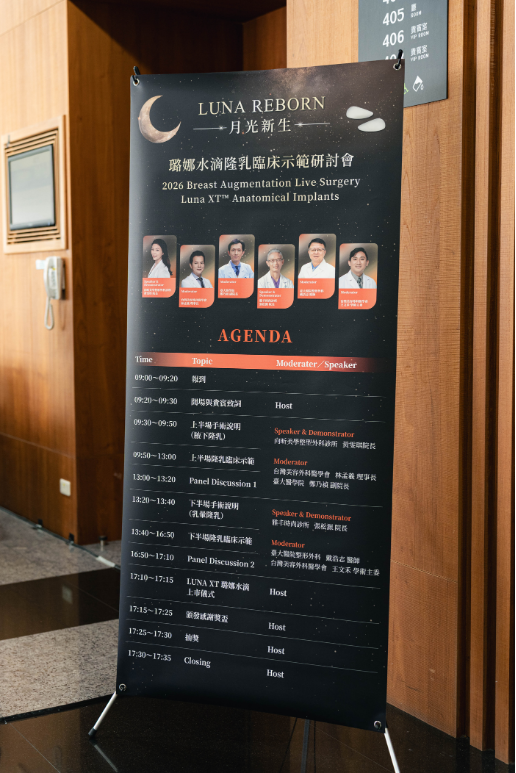
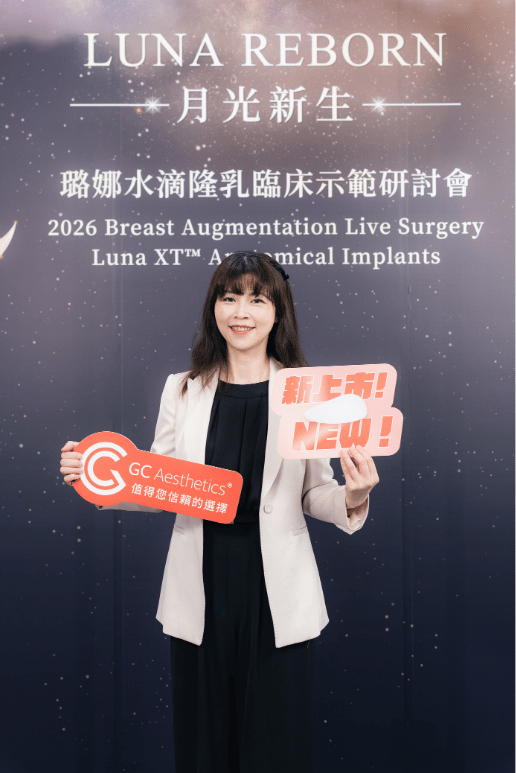
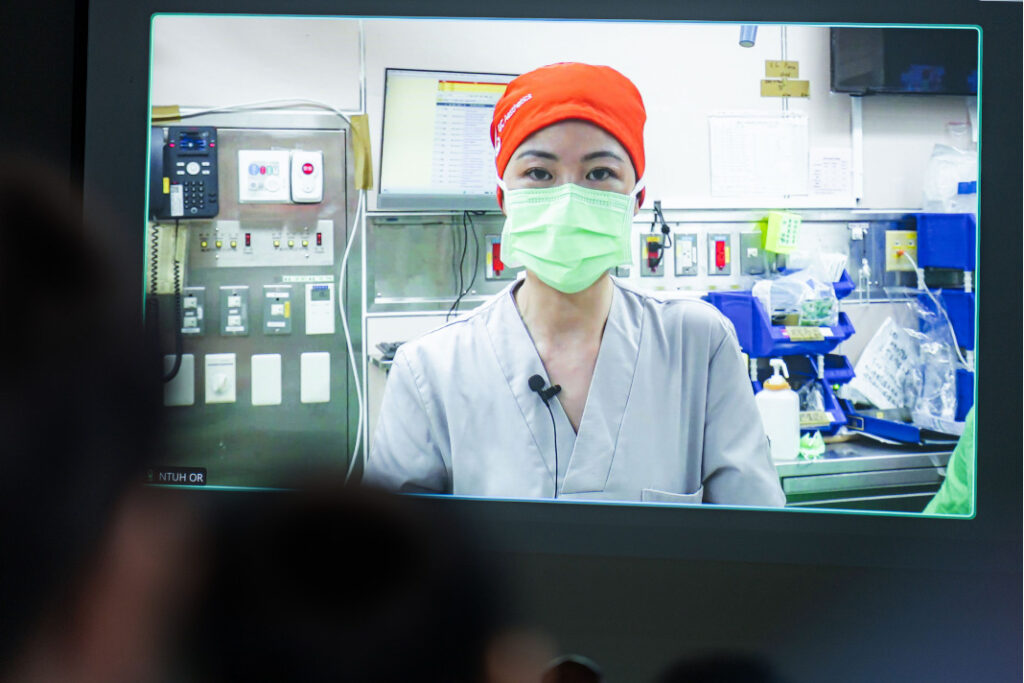
2026 年 5 月 17 日,我很榮幸受邀參與由台灣美容外科醫學會與台大醫院共同舉辦的Luna XT™(璐娜水滴)隆乳手術教學示範。在這次高規格的醫學交流中,我現場示範並分享了解剖型植入物在「經腋下內視鏡隆乳手術」中的臨床應用。
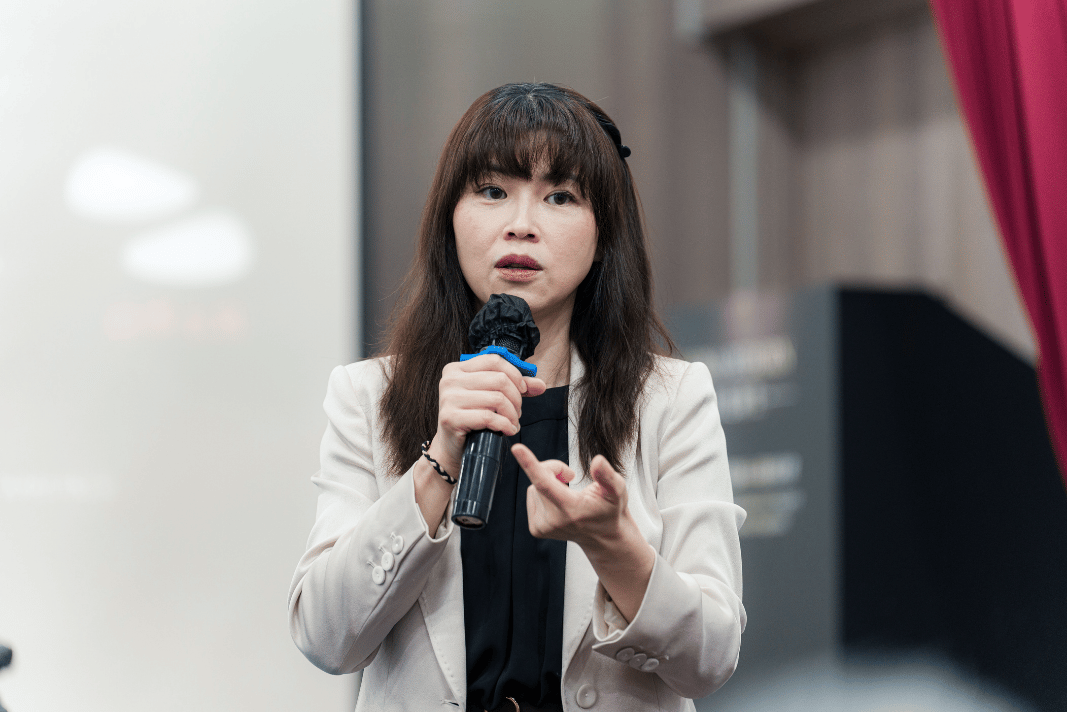
本次教學活動涵蓋了術前規劃、手術設計、植入物選擇、術中操作到術後照護等全方位面向。除了手術示範外,透過與現場座長及與會的170位醫師們的深度提問與討論,也讓我得以從不同的臨床視角,重新檢視並印證自己的隆乳手術哲學。
對我而言,理想的隆乳結果,建立在對身體條件的理解、精準的術前規劃,以及能夠長期維持穩定的系統設計之上。
因為每一次手術的背後,都代表著一位患者對自己身體的期待,也是一份交託給醫師的全然信任。

很多前來諮詢隆乳的客戶,第一個問題通常是「我要做多大?」。但在實際的醫療評估中,尺寸只是最後的數據,真正決定的關鍵,是每個人獨一無二的身體基礎條件。
每位患者的先天條件都不同,這些都會直接影響適合的植入物大小、形狀與擺放位置:
| 評估核心面向 | 對手術結果的影響 |
|---|---|
|
胸廓形狀與肋骨角度 |
決定植入物是否會往外擴或內聚。 |
|
乳房原位置與乳頭高度 |
影響術後雙乳的對稱性與自然下垂感。 |
|
皮膚彈性與組織鬆弛度 |
決定容納植入物的空間上限與觸感自然度。 |
|
上胸凹陷嚴重度 |
決定是否需要特殊形狀(如水滴型)來補足上胸飽滿度。 |
在隆乳手術中,圓形假體與水滴型假體各有適合的身體條件。
圓形假體較能提供整體飽滿感,而 Luna XT™ 水滴型假體則更重視胸型上下比例與自然線條。
對於上胸較扁、胸型比例需要調整、乳房位置較低,或希望增加容量但仍保留自然垂墜感的患者,水滴型假體能提供另一種結構上的選擇。
其中也包含部分產後萎縮、上胸凹陷或下胸支撐不足的情況,以這次的示範手術為例,個案本身有產後鬆弛與上胸凹陷,並合併輕微雞胸與外側肋骨較傾斜的條件。這類胸廓若只照標準位置放置植入物,術後外擴的風險會大幅增加。因此,在術前設計時,必須預先調整植入物的位置並精準控制手術空間,讓胸型能融入患者原本的身體結構。
在手術過程中,我一直非常重視 Natural Border(身體原有的組織邊界),因為乳房的最終形狀,是由胸廓、筋膜、乳腺組織、皮膚包覆性與植入物共同形塑而成的。
因此,在進行內視鏡剝離時,我堅持兩大原則:
自然隆乳的關鍵,在於比例、結構與組織張力之間的完美平衡。當胸型能與原本的身體條件和諧共存,手術結果才有機會在動態活動與長期追蹤中,依然維持穩定不走樣。
隆乳手術不只是「把植入物放進去」,更考驗醫師如何在手術中,為植入物打造一個量身設計的「黃金空間」。
這個空間的精準度必須剛剛好:
在這次的示範手術中,我特別強調整體穩定性的控制。從剝離範圍的拿捏、出血點的精準控制、植入物方向的微調到最終位置的確認,每一個細節都決定了術後胸型能否長久維持在理想位置。
患者雖然無法看見,這些手術過程的努力與控制,但它們會深刻反映在結果上:胸型是否自然、位置是否穩定、恢復過程是否順利,以及多年後是否仍能維持協調的比例。
隆乳手術完成後,植入物便開始持續與身體組織進行長期的互動。它會受到組織張力、日常姿勢、活動、內衣支撐與穿戴習慣的影響,因此術後照護同樣是決定最終成敗的關鍵環節。
我非常重視術後定位與內衣選擇。由於水滴型植入物具有方向性,需要等待它逐漸下降並穩定到適當位置後,才能進入合適的內衣支撐階段。過早或不當的內衣壓迫,很容易改變植入物的受力方向,進而影響胸型。而在植入物到達設計的定位時,選擇提供適量支撐的內衣極為重要。
長期來看,內衣並非只是穿搭選擇,而是維持胸型穩定的重要因素:
術後恢復不只是等待胸型穩定的過程,也是一段患者重新熟悉身體、學習與新胸型相處的時間。因此,術後照護並非患者獨自承擔的責任,而是醫師與患者共同維持穩定結果的系統工程。
理想的隆乳手術,追求的是一個能禁得起時間驗證、符合先天身體條件,且能讓患者真正安心享受的自然胸型。人體會老化,機能可能退步,但不像3C產品可以輕易每年一換。
患者將自己的身體交給醫師,期待的是外觀的改變,更包含安全、穩定與長期的安心。當胸型能與身體長久協調,這項手術才真正成為一個最適合自己的美好選擇。
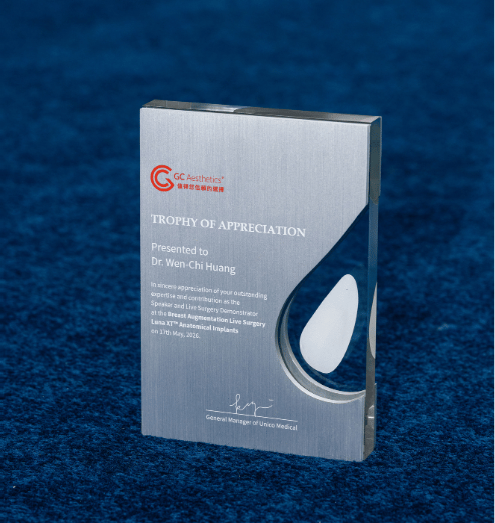
Executive Summary: An ideal breast augmentation is more than implant placement; it is a high-precision system of clinical planning and execution. In this column, Dr. Wen-Chi Huang shares her insights from performing a live surgical demonstration at the TSAPS 2026 Breast Augmentation Live Surgery event. She discusses how precise pre-operative planning, respect for native anatomical boundaries, and individualized post-operative care work together to create a breast profile with natural dynamics and long-term stability.
Just yesterday (May 17, 2026), I had the distinct honor of being invited by the Taiwan Society of Aesthetic Plastic Surgery (TSAPS) and National Taiwan University Hospital (NTUH) to perform a live educational demonstration for the Luna XT™ anatomical breast augmentation workshop. In this high-caliber academic exchange, I demonstrated and discussed the clinical application of anatomical implants through the transaxillary endoscopic breast augmentation approach.
The curriculum covered a comprehensive range of topics, including pre-operative assessment, surgical planning, implant selection, intraoperative execution, and post-operative care. Beyond the live surgery itself, the in-depth questions and discussion with the moderators and 170 attending surgeons allowed me to re-examine and further validate my own philosophy on breast augmentation from different clinical perspectives.
For me, an ideal breast augmentation outcome is built upon an understanding of the patient’s physical conditions, precise pre-operative planning, and a system designed to maintain long-term stability. Behind every procedure lies a patient’s expectation for her body, as well as the trust she places in her surgeon.
When patients come in for breast augmentation consultations, their first question is often, “What size should I choose?” However, in medical assessment, implant size is the final decision rather than the starting point. The true determining factor is each person’s unique baseline anatomy.
Each patient presents different anatomical conditions, which directly influence the appropriate implant size, shape, and position:
| Core Assessment Dimensions | Impact on Surgical Outcomes |
|---|---|
|
Thoracic Shape & Rib Angulation |
Influences whether the implants tend to move outward or toward the midline. |
|
Native Breast Position & Nipple Height |
Influences post-operative symmetry and the natural position of the breast. |
|
Skin Elasticity & Tissue Laxity |
Defines the upper limit of pocket capacity and contributes to natural palpability. |
|
Severity of Upper Pole Deficiency |
Helps determine whether a specific implant shape, such as an anatomical or teardrop design, is needed to support upper pole fullness. |
In breast augmentation, round implants and teardrop-shaped implants each have anatomical conditions for which they are better suited. Round implants are often chosen to provide overall fullness, while Luna XT™ teardrop implants place greater emphasis on the balance between the upper and lower breast as well as a more natural contour.
For patients with a flatter upper breast, breast proportions that require adjustment, a lower native breast position, or a desire to increase volume while preserving a natural draping effect, teardrop-shaped implants can offer another structural option.
These conditions may also include certain cases of post-partum laxity, upper pole hollowing, or insufficient lower pole support. In the live demonstration surgery, for example, the patient presented with post-partum laxity and upper pole hollowing, along with mild pectus carinatum and a more slanted lateral rib angle.
In this type of chest wall anatomy, placing the implant in a standard position may significantly increase the risk of lateral displacement after surgery. Therefore, during pre-operative planning, the implant position must be adjusted in advance and the surgical pocket must be precisely controlled, allowing the final breast contour to integrate more naturally with the patient’s original body structure.
Surgeon’s Micro-Notes: “Understand the baseline anatomy before deciding on the surgical design.” Ideal natural-looking breast augmentation does not focus on maximizing volume; it focuses on achieving harmony among breast shape, proportion, and body contour.
Throughout the surgery, I placed great emphasis on the Natural Border, meaning the body’s original tissue boundaries. The final shape of the breast is formed by the chest wall, fascia, breast tissue, skin envelope, and implant working together.
Therefore, during endoscopic dissection, I adhere to two main principles:
The key to natural breast augmentation lies in the balance among proportion, structure, and tissue tension. When the breast shape can coexist harmoniously with the patient’s native anatomy, the surgical outcome has a greater chance of remaining stable during movement and long-term follow-up.
Breast augmentation is more than placing an implant. It also tests how the surgeon creates a precise, stable, and individualized implant pocket.
The dimensions of this pocket must be carefully controlled:
In this demonstration surgery, I specifically emphasized the control of overall stability. From defining the extent of dissection and controlling bleeding points, to fine-tuning implant orientation and confirming final position, every detail influences whether the post-operative breast shape can remain in its intended position over time.
Although patients cannot directly see these intraoperative efforts and controls, they are clearly reflected in the outcome: whether the breast shape appears natural, whether the implant position remains stable, whether recovery proceeds smoothly, and whether harmonious proportions can be maintained years later.
After breast augmentation is completed, the implant begins a long-term interaction with the surrounding tissues. It is influenced by tissue tension, daily posture, activity, and bra support habits. Therefore, post-operative care is also a critical factor in the final outcome.
I place great emphasis on post-operative implant positioning and proper bra selection. Because anatomical implants have directional orientation, the implant needs time to gradually settle into its appropriate position before entering the stage of structured bra support. Premature or improper compression from a bra can alter the direction of force on the implant and affect the breast shape. Once the implant reaches its planned position, selecting a bra that provides appropriate support becomes very important.
Over the long term, bra selection is not merely a styling choice. It is an important factor in maintaining breast shape stability:
Post-operative recovery is not only a period of waiting for the breast shape to stabilize. It is also a time for the patient to become familiar with her body again and learn how to live with the new breast shape. Therefore, post-operative care is not a responsibility for the patient to carry alone; it is a shared system between the surgeon and the patient for maintaining stable outcomes.
An ideal breast augmentation aims to create a natural breast profile that can stand the test of time, align with the patient’s baseline anatomy, and allow her to enjoy the result with peace of mind. The human body ages and physiology changes; unlike consumer electronics, it cannot be easily replaced or upgraded every year.
When patients entrust their bodies to a surgeon, they are seeking a change in appearance, but also safety, stability, and long-term reassurance. When the breast shape remains in harmony with the body over time, this surgery can become a well-suited and meaningful choice for that individual.